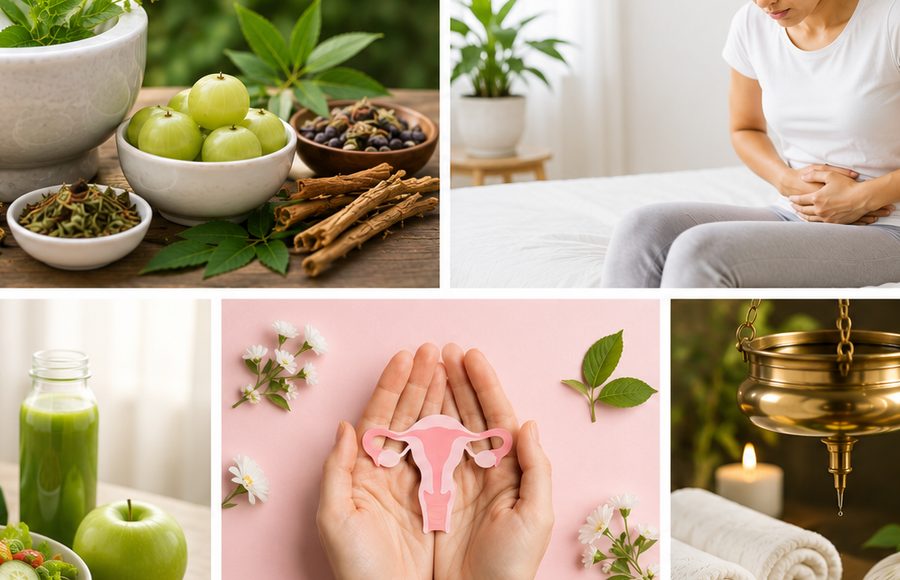
Practical diet and lifestyle considerations for piles, with an individualized Ayurvedic perspective on digestion and bowel regularity.
Why Diet and Lifestyle Matter
Healthy bowel habits can be an important part of managing factors associated with piles. The goal is generally to reduce constipation and avoid repeated straining.
Balanced Meals
Choose varied, balanced meals that provide appropriate fibre and nutrients. Fruits, vegetables, whole grains and other fibre-containing foods can be included according to individual tolerance and nutritional needs.
Hydration
Adequate fluid intake can help support normal bowel function. Individual fluid needs vary, particularly for people with certain medical conditions, so personal medical advice should be followed when applicable.
Persistent, recurrent or unexplained rectal bleeding should be evaluated by a qualified healthcare professional rather than assumed to be caused by piles.
Physical Activity
Regular, suitable movement can support general health and bowel regularity. Walking and other comfortable forms of activity may be useful for many people.
Toilet Habits
Respond to the urge to pass stool rather than repeatedly postponing it. Avoid excessive straining and prolonged sitting on the toilet.
Ayurvedic Guidance
An Ayurvedic practitioner may consider digestion, appetite, bowel pattern, daily routine and individual health factors when providing dietary and lifestyle guidance.
Individualized Care
Dietary changes should be practical and sustainable. If symptoms persist or recur, professional assessment can help determine whether further evaluation or treatment is needed.